
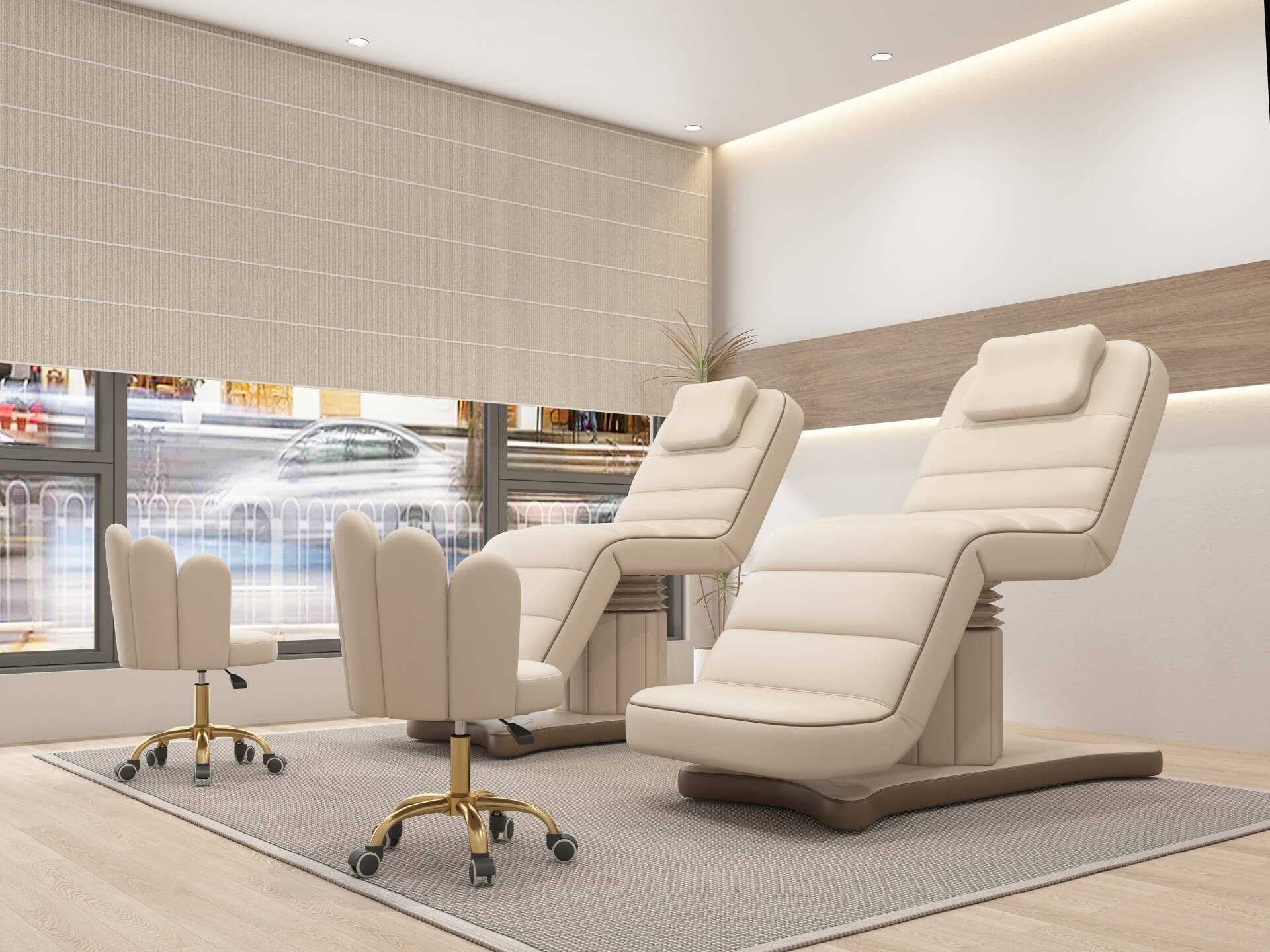
 Beauty & Spa
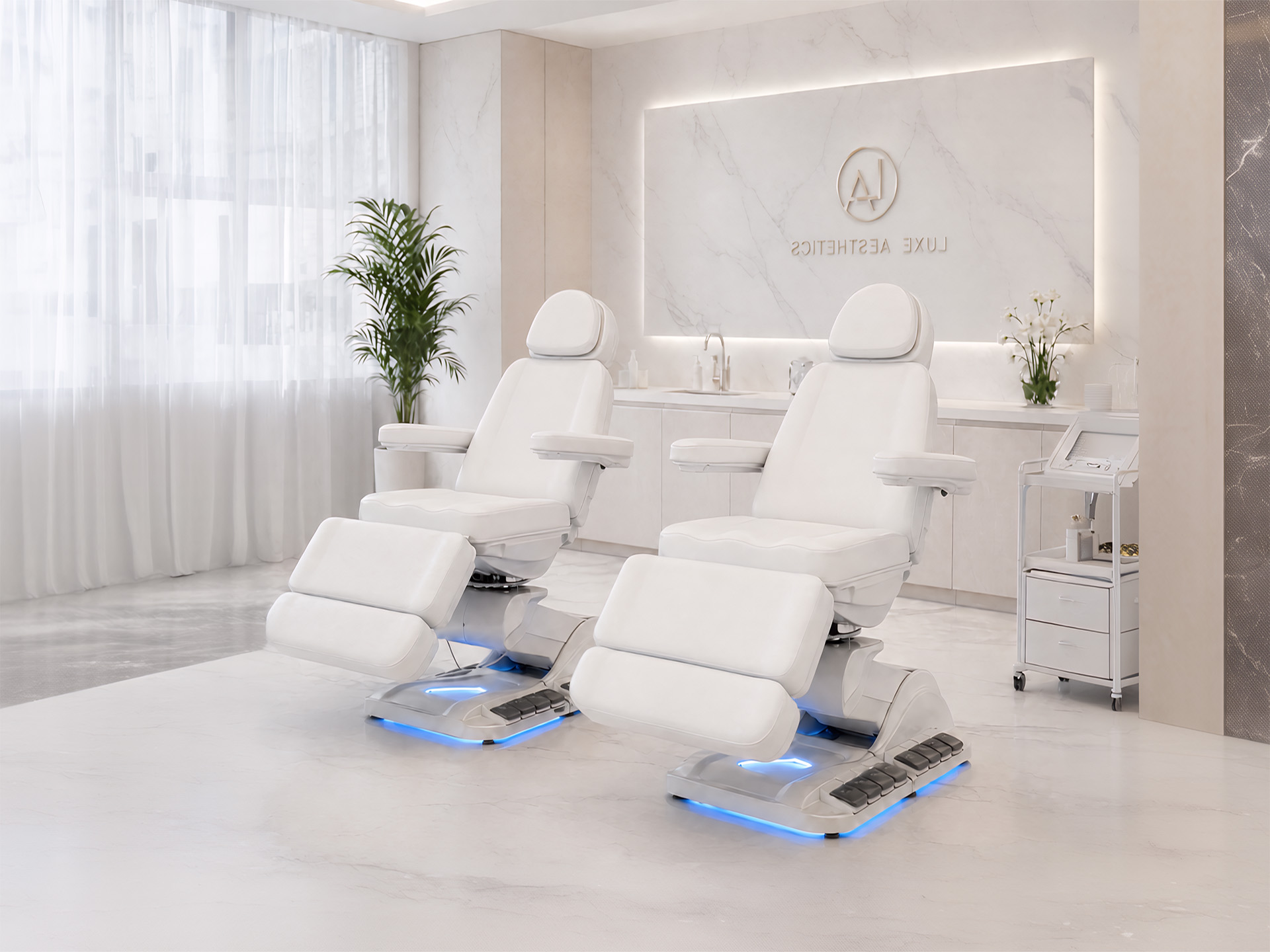 Examination and Treatment
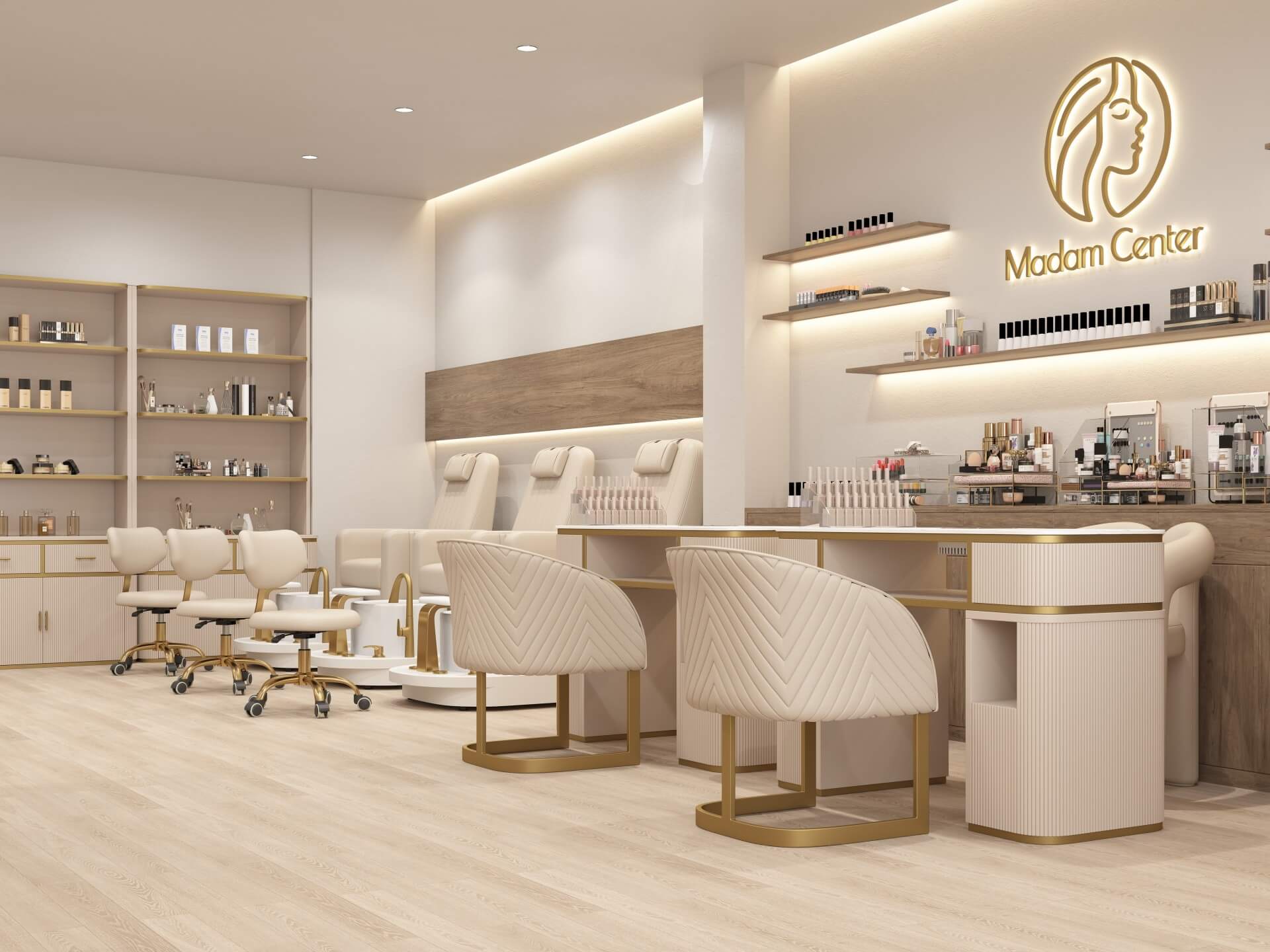 Pedicure & Manicure Nail Salon
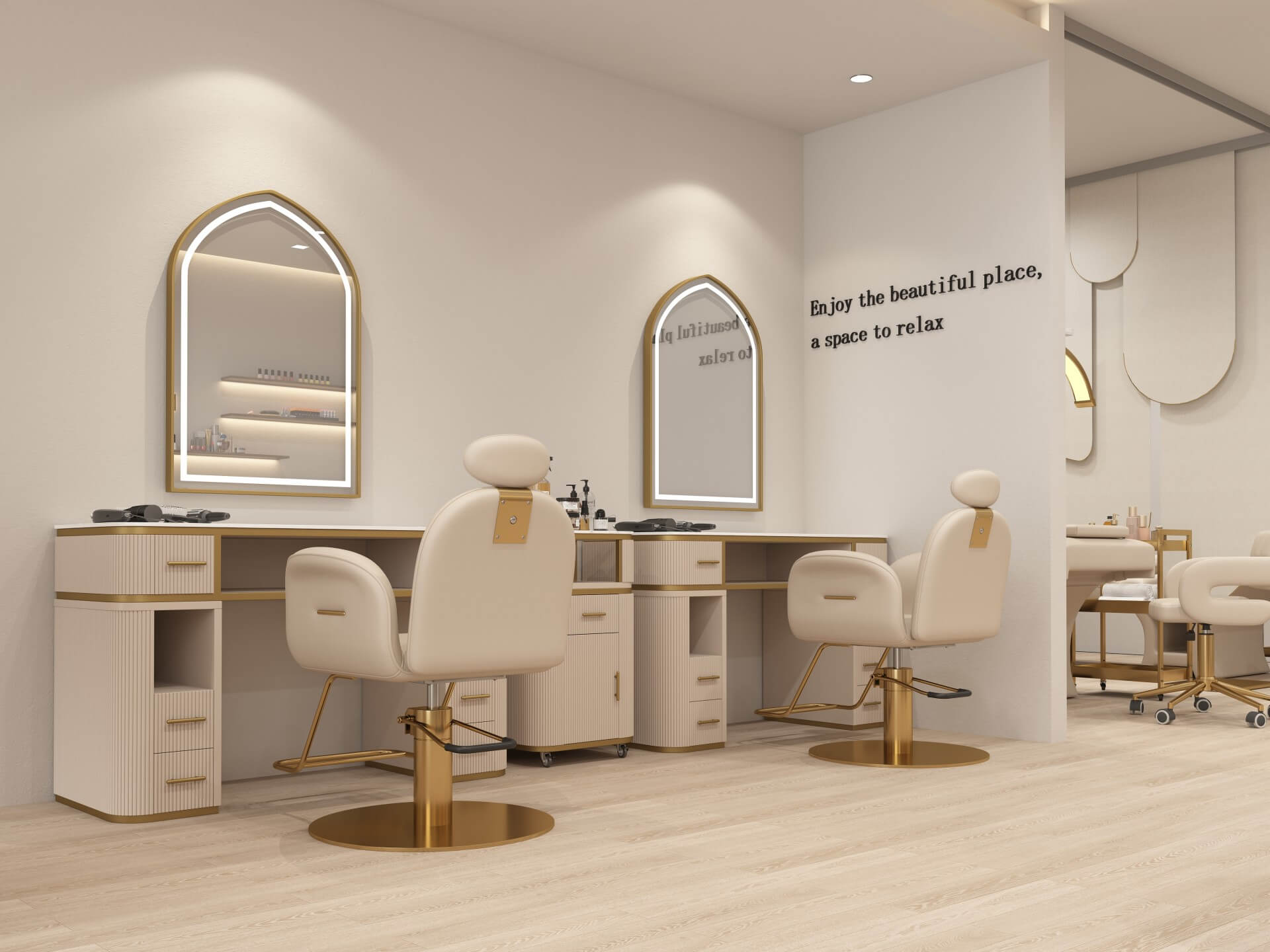 Barber & Hair Wash Salon
 Salon Reception
 Parts
 MaDaini Series




 All articles
Madam Center as a Custom Facial Bed Manufacturer: What Furniture Does a Med Spa Need? Complete Furniture Checklist

Outfitting a modern medical spa requires harmonizing clinical functionality with luxury interior aesthetics. Sourcing equipment from an established custom facial bed manufacturerensures that each treatment couch meets rigorous medical hygiene standards while reinforcing the clinic brand. A well-engineered med Spa Furniture checklist guides clinic founders, medical directors, and purchasing agents through outfitting procedure rooms, consultation offices, and recovery suites.
Madam Center, the professional aesthetic equipment brand under Create Everything Healthcare Tech (Guangdong) Co., Ltd., designs and manufactures bespoke clinical treatment furniture. From its industrial facility in Shunde, Foshan, the brand exports certified electric treatment platforms and cohesive clinic furniture packages to medical spas and aesthetic centers across more than 100 countries.
Make the Treatment Bed the Primary Room Specification
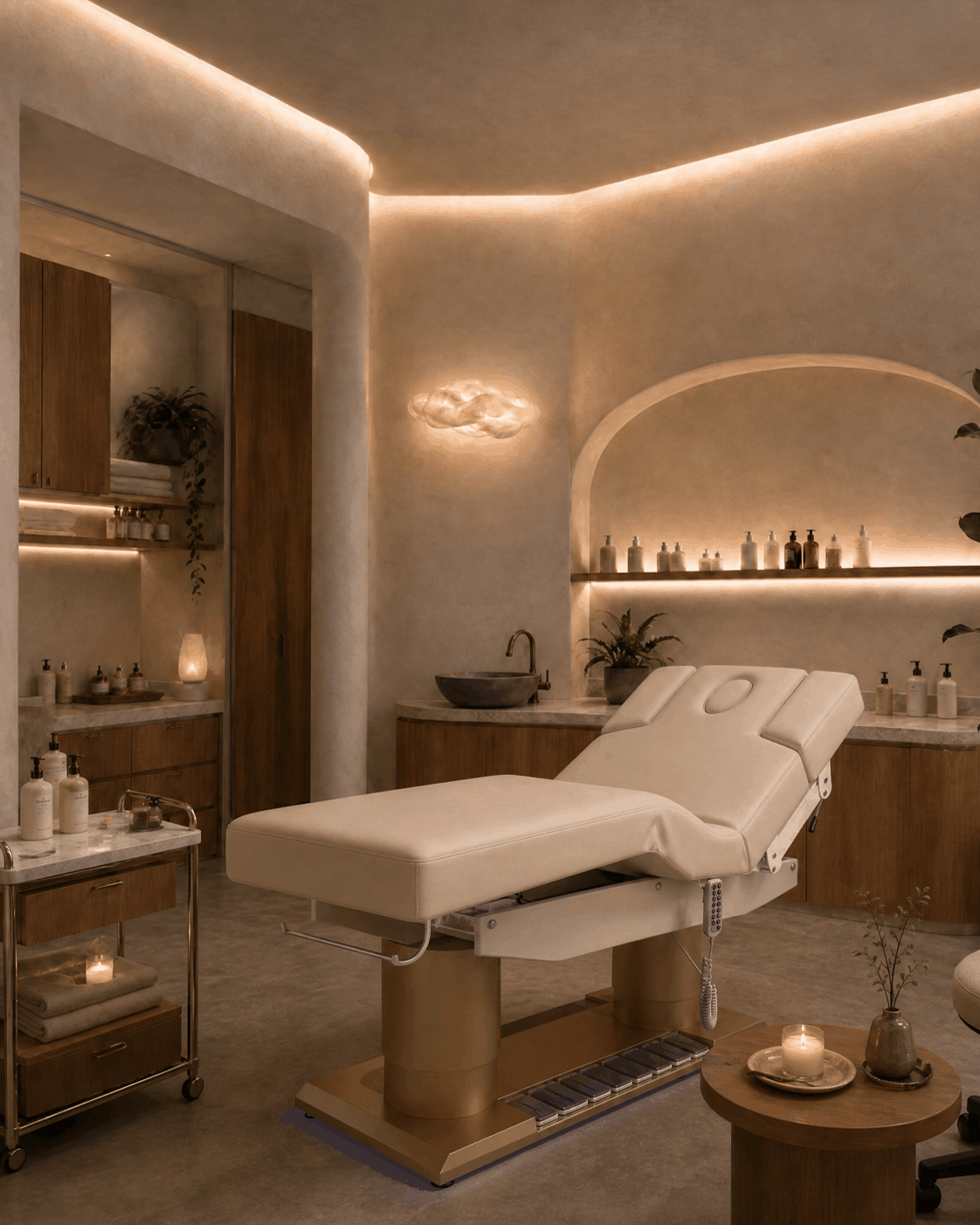
In an aesthetic clinic, the treatment couch acts as the primary workstation calibrating room dimensions, floor electrical conduits, and practitioner movement. Choosing the correct bed architecture dictates patient comfort during multi-hour treatments and guarantees steady ergonomic support for clinicians.
Madam Center engineers distinct electric platforms for diverse clinical workflows. The TR2608 Medical Aesthetic Bed features four synchronized motorized actuators governing height, backrest, leg-rest, and whole-bed tilt. It integrates dual-side base foot pedals for hands-free adjustments alongside programmable memory presets that rapidly return the bed to zero-position between appointments.
For dynamic treatment suites, the TR2607 introduces 360-degree rotation on a heavy-duty pedestal column. This allows practitioners to effortlessly swivel the patient toward surgical lighting or diagnostic equipment without rearranging room furniture, maximizing spatial efficiency in compact clinic suites.
Add Practitioner Seating Around the Required Working Positions
Practitioner seating directly influences clinician stamina and injection precision during delicate dermatological procedures. Generic office stools lack the specialized pelvic support required for hours of seated clinical work, frequently leading to practitioner lumbar fatigue.
Med spa suites require ergonomic saddle stools that tilt the pelvis slightly forward, maintaining the spine natural lordotic curve. Heavy-duty pneumatic gas cylinders provide effortless vertical adjustment, aligning the clinician eye level with the client face. Smooth-rolling, hair-resistant casters glide silently across clinic vinyl or tile floors without scratching.
Use Mobile Carts for Tools that Must Move with the Procedure
Effective clinical hygiene requires keeping sterile consumables, topical anesthetics, and apparatus handpieces within immediate reach of the practitioner. Scrambling for supplies during an active laser or micro-needling session disrupts procedural flow and compromises sterile boundaries.
Madam Center manufactures medical-grade aesthetician carts featuring powder-coated steel chassis, tempered safety glass, and chemical-resistant acrylic trays. Multi-tiered shelving with perimeter guardrails prevents costly cosmetic ampoules from sliding during transit, while integrated power channels secure apparatus cables cleanly.
Plan Fixed Storage, Reception, and Waiting Furniture at the Project Level
Beyond private treatment rooms, a cohesive medical spa demands seamless spatial planning across public zones. Fragmented sourcing between back-of-house medical equipment and front-of-house casegoods creates visual dissonance that detracts from a premium clinical experience.
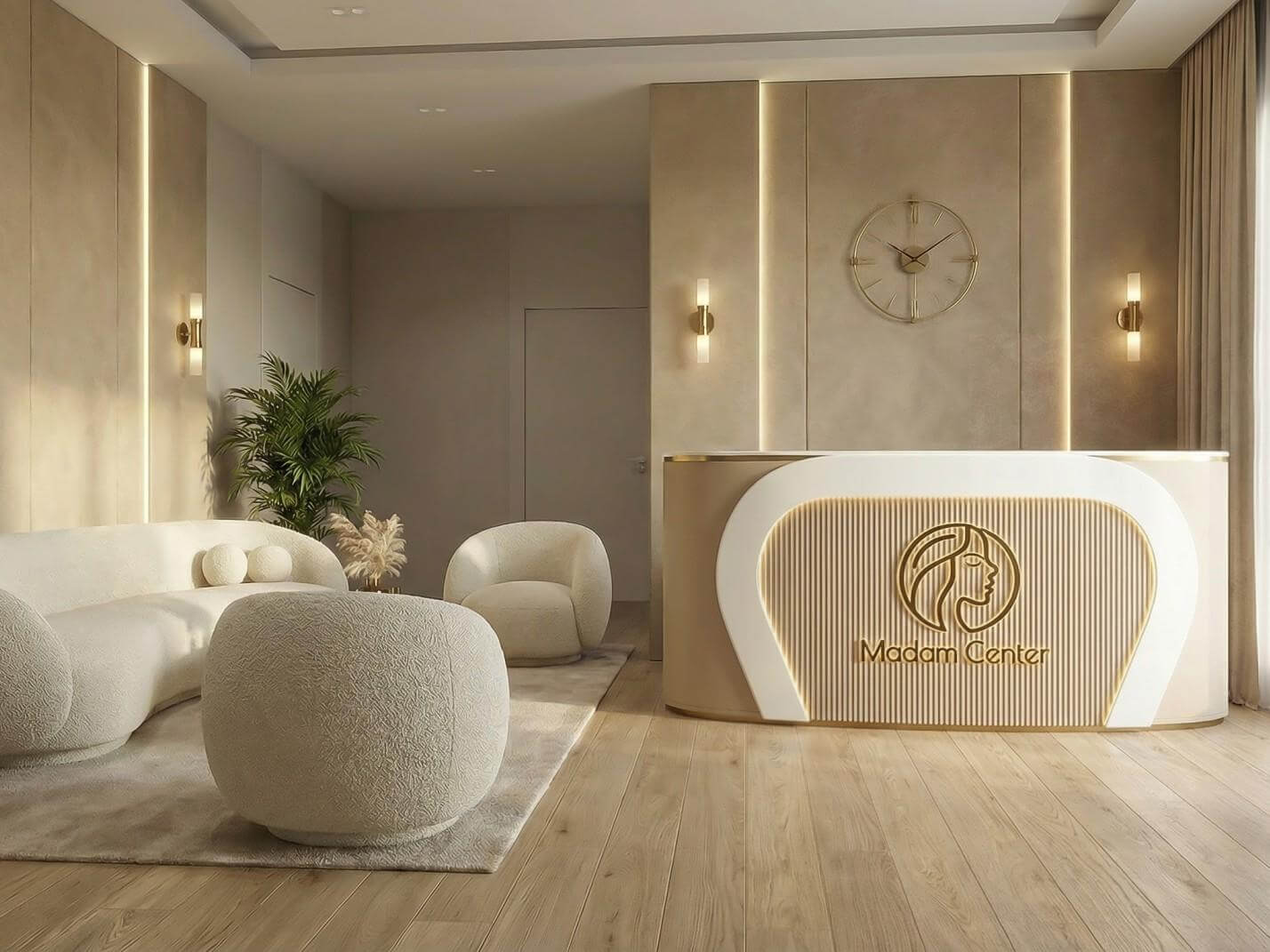
Project-level procurement coordinates executive Reception Desks engineered with concealed wire trunking, appointment terminal cutouts, and privacy returns. Matching waiting lounge seating upholstered in commercial stain-resistant silicone leathers creates a cohesive design narrative that reassures arriving patients.
Define the Customization Boundary Before Engineering Begins
Customization allows medical spa brands to deliver distinctive spatial experiences, yet unmanaged modifications can inflate tooling budgets and extend lead times. Successful project directors evaluate custom requirements through a disciplined engineering hierarchy, categorizing changes by technical complexity.
Finish and Branding Changes Are the Simplest Layer
The most rapid customization tier alters surface aesthetics while preserving proven chassis and motorized mechanical assemblies. Clinic brands can specify bespoke corporate pantones across medical-grade silicone leathers, incorporating contrast perimeter stitching or debossed logos on headrests.
Decorative hardware coatings, including champagne gold, brushed brass, or matte black powder coating, integrate seamlessly into existing production lines without altering mechanical balance or certification compliance.
Dimension and Material Changes Need Sample Control
Modifications to platform widths, foam firmness, or structural panel materials alter weight distribution and mechanical stress profiles. Widening couch platforms to 85 cm or 90 cm accommodates bariatric patients but requires reinforcement of the central scissor or column mechanism.
Specifying multi-layer cushioning stacks combining high-density base foam with memory foam toppers demands physical pilot sampling. Fabricating a sample unit verifies structural balance and confirms that upholstery seams align smoothly over modified contours.
Structural or Electrical Changes Need a Separate Feasibility Review
Deep revisions that alter mechanical pivot points, motor stroke travel, or electrical wiring harnesses require formal engineering feasibility reviews. Modifying actuator linkages or developing custom wireless foot controls demands dedicated CAD simulations and cycle endurance testing.
Integrating dual-voltage power supplies (110V/220V) or internal battery backup systems requires dedicated electrical certification testing. Managing these modifications as specialized engineering phases protects equipment reliability in daily clinic operation.
Use Sample Approval and QA to Freeze the Project Specification
To eliminate specification drift across commercial fit-outs, Madam Center applies a rigorous six-stage verification protocol. Initial engineering consultations review architectural room drawings, service menus, and brand guidelines before generating dimensional CAD blueprints and wiring schematics.
Physical material swatches verify color fidelity under clinic lighting before a functional pilot sample is produced. After inspecting stitch tension, motor acoustics, and load stability, the client signs off on a master specification baseline that governs subsequent production runs.
Frequently Asked Questions about Med Spa Furniture
Does Every Med Spa Need the Same Furniture?
No. Equipment packages depend heavily on clinical service menus. An injectables clinic requires four-motor beds with Trendelenburg tilt and foot pedals, whereas a laser-focused facility prioritizes spacious mobility carts and robust electrical grounding.
When Should a Facial Bed Be Customized?
Customization is recommended when standard catalog units fail to match corporate interior palettes, specific room dimensions, or unique practitioner workflow requirements. Bespoke branding also reinforces corporate identity across multi-location clinic chains.
Are Clinical Storage and Sterilization Systems Part of Every Salon Furniture Package?
No. Standard salon packages focus on seating, mirrors, and basic Trolleys. Medical spas require specialized medical-grade storage units, lockable supply credenzas, and mobile carts compatible with hospital-grade sanitizing chemicals.
Why Is a Pre-Production Sample Important for Custom Furniture?
A physical sample verifies foam firmness, leather hand feel, seam alignment, and motor noise under actual working conditions. Approving a sample prevents costly manufacturing errors across large multi-room orders.
What Information Should a Med Spa Send for a Custom Quote?
Provide architectural floor plans, a detailed list of clinical services, target delivery deadlines, corporate color codes, and any specific motorized movement or electrical requirements to receive an accurate technical quotation.
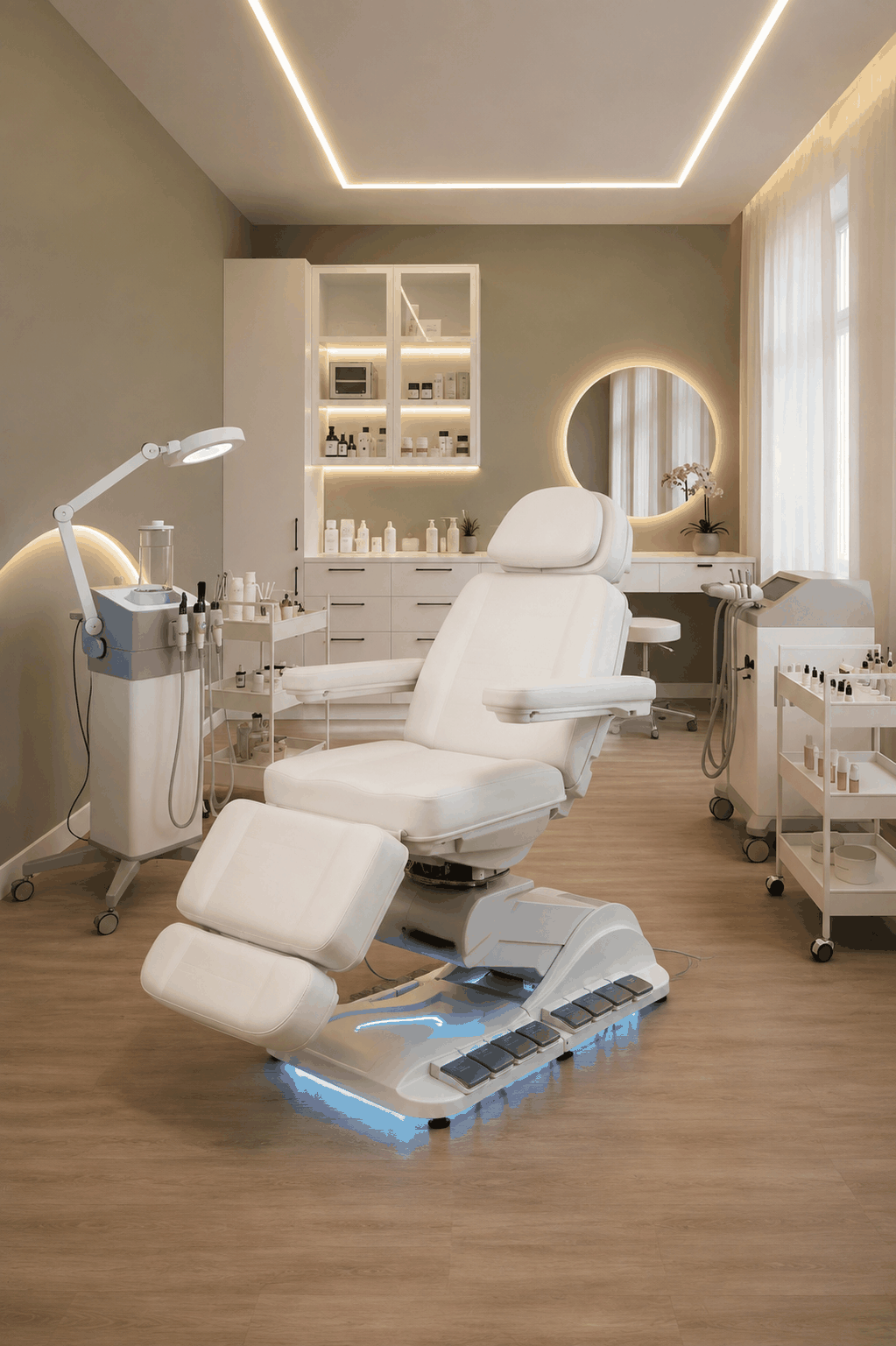
Convert the Room Plan into a Custom Furniture Package
Fitting out a high-end medical spa requires anchoring room design in clinical ergonomics, certified engineering, and cohesive interior styling. Unifying treatment beds, clinician seating, and casegoods under one controlled specification ensures seamless project delivery.
Clinic founders, architects, and purchasing directors are invited to partner with Madam Center. Contact our engineering consultants or explore custom medical spa collections at https://www.madamcenter.com/.