
So, you're hunting for a reliable Massage bed manufacturer in China? It takes a lot more than scanning catalog prices. If you're buying globally, you need to dig into construction, what the factory can actually do, how they communicate, and what kind of after-sales support they offer. This guide looks at ten manufacturers that work with professional clinics, spas, hotels, and wellness studios.
What goes into the review? Frame materials, foam resilience, upholstery quality, electric adjustment, weight capacity, and how well everything is packed for protection. A stable bed should stay firm even after repeated height changes. Smooth motors really matter when therapists are repositioning clients. And don't overlook seam stitching—small defects can turn into expensive headaches once the bed has crossed borders.
The selection also weighs factory experience, production transparency, customization options, and documented quality procedures. Buyers should ask for samples, inspection records, warranty terms, and clear shipping details. Certifications can vary depending on the destination, so it's still smart to verify them independently. Some manufacturers also make a Massage And Facial Bed for treatments that need adjustable backrests and facial openings. Product pages can look great, sure. But they aren't proof by themselves.
A lower price might be hiding weaker hinges, thinner padding, or limited replacement support. Some comparisons stay imperfect because public factory data isn't complete. That's worth being honest about. The companies featured here are judged on practical value, not just marketing claims. Each profile points out suitable applications, notable strengths, possible concerns, and questions buyers should ask before placing a bulk order. The goal? Help distributors and salon owners make a more informed choice when they pick a Massage Bed for long-term professional use.

A reliable massage bed manufacturer proves capability beyond a polished catalog. The Global Wellness Institute valued the wellness economy at 5.6 trillion US dollars in 2022. It expects 8.5 trillion by 2027. This growth increases demand, but also attracts inconsistent suppliers. Buyers should inspect factory experience, material traceability, and quality records. Ask for load-testing results, foam density, frame dimensions, and stitching samples. A strong manufacturer explains tolerances clearly. Vague promises are warning signs.
ISO’s Survey of Certifications reported more than 1.2 million ISO 9001 certificates worldwide in 2023. Certification can indicate controlled processes, not guaranteed product quality. That distinction matters. Verify the certificate’s scope and issuing body. Request batch inspection records and a live factory audit. Check whether the same tested components reach mass production. In practical use, unstable hinges, weak hydraulics, or odor-heavy foam can damage customer trust. I have found that small details often expose larger process problems. Yet one inspection cannot predict every shipment. Buyers should admit that limitation.
Tips: Order a pre-production sample. Test it for seven days. Measure height stability, surface recovery, noise, and cleaning resistance. Keep written approval samples. Include packaging photographs and acceptable defect limits in the purchase contract. Ask for corrective-action records, even when they reveal past failures. Honest documentation is usually more valuable than perfect-sounding claims.
China’s massage bed industry is concentrated in several manufacturing regions, each with different strengths. Zhejiang supports metal fabrication, adjustable frames, and export-oriented assembly. Guangdong offers strong electronics, upholstery, and motor supply chains. Jiangsu is known for industrial equipment production, helping factories develop stable lifting systems and reinforced steel structures.
Fujian and Hebei also serve important parts of the supply network. Fujian suppliers often focus on wooden frames, cushions, and treatment-room furniture. Hebei provides steel processing and lower-cost component manufacturing. These regional advantages can shape product consistency, lead times, and customization options. A buyer comparing the top ten manufacturers should inspect more than a showroom. Factory visits, welding samples, load tests, and upholstery checks reveal practical capability.
A Facial And Massage Bed may look simple, yet its hinges, foam density, and cable routing affect daily safety and comfort. Experienced buyers should request drawings, material specifications, inspection records, and replacement-part policies. Ask whether motors, hand controls, and hydraulic parts are tested in-house or purchased from outside vendors. Not every factory controls the full chain. That matters.
Some suppliers report production capacity generously. Independent verification remains useful. Check carton protection, moisture control, and loading methods before placing a large order. Small defects often appear after repeated adjustment, not during a short demonstration. Regional specialization helps, but it does not replace careful sampling, documented quality checks, and clear communication about tolerances.
Selecting the top ten requires more than checking online catalogs. I compare factory audits, export records, material traceability, and after-sales procedures. Each manufacturer must show consistent production, not only attractive samples. Quality teams inspect frame welding, foam density, upholstery seams, hydraulic stability, and electrical safety. For an OEM Massage And Facial Bed, I also review drawings, packaging tests, and customization controls.
Market data provides useful context. Grand View Research estimates the global massage equipment market will grow steadily through 2030, supported by wellness spending and professional treatment demand. Mordor Intelligence also identifies Asia-Pacific as a major growth region. These reports do not prove factory quality. They only explain why supplier screening matters. My evaluation gives weight to verified capacity, defect records, certifications, warranty response, and independent customer evidence. Small details count.
A bed that shakes during adjustment is not acceptable. Neither is vague load testing. No ranking is perfect. A factory may improve after publication, while another may hide problems behind polished photographs. I therefore request recent inspection documents, production videos, and sample testing before final placement. Pricing receives limited weight because low bids can conceal thin padding, weak actuators, or unstable hinges. The final ten are selected through documented evidence, practical use checks, and repeated communication rather than popularity.
Global buyers usually compare massage beds by function, not appearance alone. Leading manufacturers offer electric massage beds, hydraulic Spa beds, portable models, and fixed treatment tables. Each category serves a different workflow. Electric models support adjustable height and backrest positions. Hydraulic designs provide smooth movement without electrical controls. Portable beds reduce setup time for mobile therapists. Fixed tables often provide stronger stability for busy clinics.
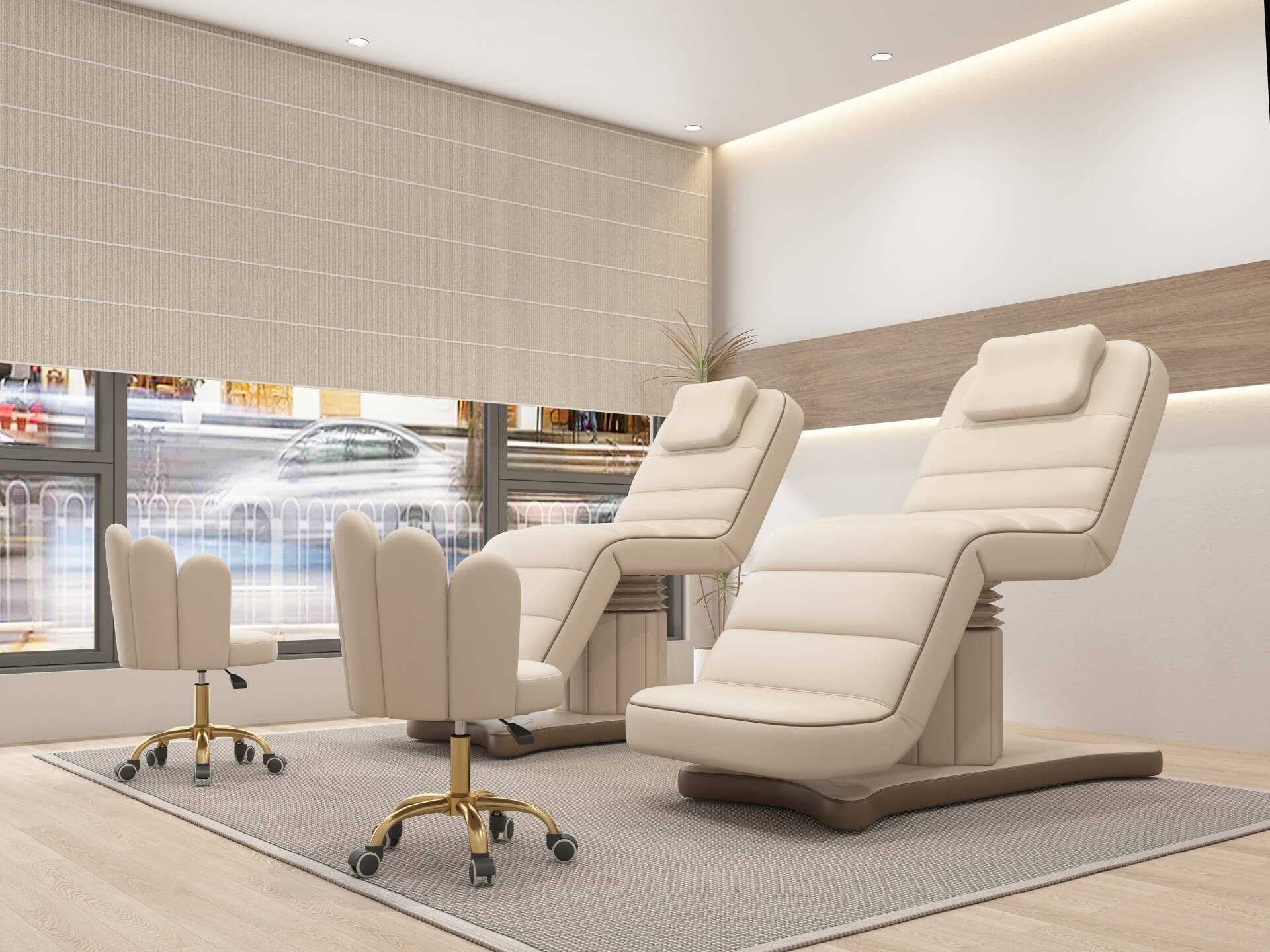
Facial Beds add specialized features, including adjustable leg sections, face cradles, removable cushions, and washable upholstery. SomeODM Massage And Facial Bed solutions combine facial treatment functions with full-body massage support. Common technologies include silent actuators, memory controls, heating systems, vibration modules, and reinforced steel frames. Buyers should also examine foam density, weight capacity, hinge durability, and cleaning resistance. These details affect comfort and service life. However, advanced functions can increase maintenance needs. More technology is not always better.
Tips: Request testing data before ordering. Check the control system, upholstery samples, and safety documentation. Ask about spare parts and warranty response times. Measure doorways and treatment rooms carefully. A bed may look suitable online, yet fail during installation. I have seen buyers focus on design and overlook working height. That mistake can create daily strain. No category fits every clinic. Reflect on staff habits, patient size, and treatment frequency before choosing.
For global buyers, China’s top ten massage bed manufacturers should be judged beyond catalog photos. Quality begins with controlled materials, repeatable assembly, and documented testing. A reliable supplier should provide frame load results, weld inspection records, foam density data, and upholstery specifications. Ask how each batch is traced. Small details matter. A loose hinge can disrupt a clinic’s workflow.
Certifications need careful verification. ISO 9001 indicates a quality management system, not perfect products. CE, RoHS, REACH, or UKCA may apply, depending on design, market, and electrical features. Request the certificate scope, issuing body, expiry date, and matching model numbers. For powered beds, review electrical safety and electromagnetic compatibility evidence where required. Do not accept a logo alone. It proves very little.
Export readiness appears in the paperwork and loading area. Experienced manufacturers prepare multilingual manuals, clear labels, HS-code support, carton drop testing, and moisture-resistant packaging. They should explain spare-part supply, warranty handling, inspection timing, and customs documents before payment. A pre-shipment inspection can check height adjustment, noise, stability, stitching, and remote controls. Yet audits are not flawless. One sample cannot represent every production run. Buyers should repeat checks and record defects, even when delivery pressure is high.
Comparing China’s top 10 massage bed manufacturers requires more than checking online prices. I usually begin with product specifications, factory experience, and export documentation. Ask each supplier for frame materials, foam density, weight capacity, and adjustable height ranges. Small details matter. A High-Quality Massage And Facial Bed should remain stable when the backrest moves. Check welding points, hinges, stitching, and motor noise through videos or samples.
Request a detailed quotation with unit price, packaging, spare parts, warranty terms, and production time. Confirm whether the quoted price includes customization, inspection, and shipping to your destination. Compare at least three samples under the same conditions. Measure surface width and working height with a simple tape measure. A soft cushion may feel impressive at first, but it can lose support after repeated use. I have seen attractive samples fail during routine testing. That experience changed how I evaluate suppliers.
Before placing an order, approve a written specification sheet and a pre-production sample. Use clear photos for color, logo placement, cable routing, and carton markings. Discuss payment stages carefully, linking the final payment to inspection results. Independent quality checks can reduce misunderstandings, especially for large orders. Still, inspections are not perfect. A supplier may pass one check and miss a packaging weakness later. Keep communication records, confirm delivery responsibilities, and order a small trial quantity before scaling production. Ask direct questions. Hesitation can be informative.
Zhejiang supports metal frames, adjustable structures, and export assembly. Guangdong supplies electronics, upholstery, and motors. Jiangsu produces lifting systems and reinforced steel parts. Fujian focuses on wooden frames and cushions. Hebei offers steel processing and lower-cost components.
Visit the factory when possible. Inspect welding samples, load tests, upholstery seams, and adjustment systems. A showroom can hide weaknesses. Ask for recent production videos and inspection records.
Request drawings, material specifications, foam density, weight capacity, and height ranges. Check hinge strength and cable routing. Also ask about replacement motors, controls, and hydraulic parts.
Regional strengths can affect consistency, lead times, and customization. A supplier may excel at steel but outsource electronics. That is important. Full-chain control is not guaranteed.
Evaluation should include factory audits, export records, traceability, defect records, and warranty response. Inspect welding, foam, seams, hydraulics, and electrical safety. Attractive photos are not evidence.
Compare unit price, packaging, spare parts, warranty terms, production time, and shipping responsibilities. Confirm whether customization and inspection are included. Cheap offers may hide weak padding or unstable hinges.
A bed may feel stable during a short demonstration. Repeated adjustments can reveal shaking, motor noise, or lost cushion support. Test several samples under identical conditions. Small defects matter.
Approve a written specification and pre-production sample. Confirm colors, markings, cable paths, and carton protection. Consider an independent inspection. Order a small trial quantity before increasing volume.
No ranking is perfect. A factory may improve after publication, or polished images may conceal problems. I would reassess suppliers using recent documents, samples, and direct communication. Hesitation can be informative.
China has become a major sourcing destination for global buyers seeking reliable Massage Bed manufacturers, offering broad production capacity, competitive pricing, and flexible customization. This guide explains what distinguishes a dependable supplier, including manufacturing experience, material control, production consistency, engineering support, and communication efficiency. It also reviews China’s key manufacturing regions and their capabilities in producing portable, electric, hydraulic, spa, beauty, and treatment beds with features such as adjustable structures, durable upholstery, ergonomic designs, and smart control systems.
The selection of the top 10 manufacturers is based on product quality, innovation, factory capacity, certifications, quality management, export experience, and after-sales service. Buyers will learn how to assess safety standards, verify documentation, compare quotations, evaluate minimum order quantities, confirm lead times, and manage samples and inspections. By using these criteria, international purchasers can reduce sourcing risks, identify suitable partners, and place orders with greater confidence while building stable, long-term supplier relationships.